The physical problem
A numerical model must end somewhere, but physical waves continue travelling. Reflections from the model boundary can be mistaken for real resonances or attenuation.
MSc candidate · Fluid-soil-structure wave propagation
How can a finite simulation reproduce waves travelling through an open seabed?
Guilherme develops and validates multiphysics models of waves crossing water, soil and submerged structures using perfectly matched layers.
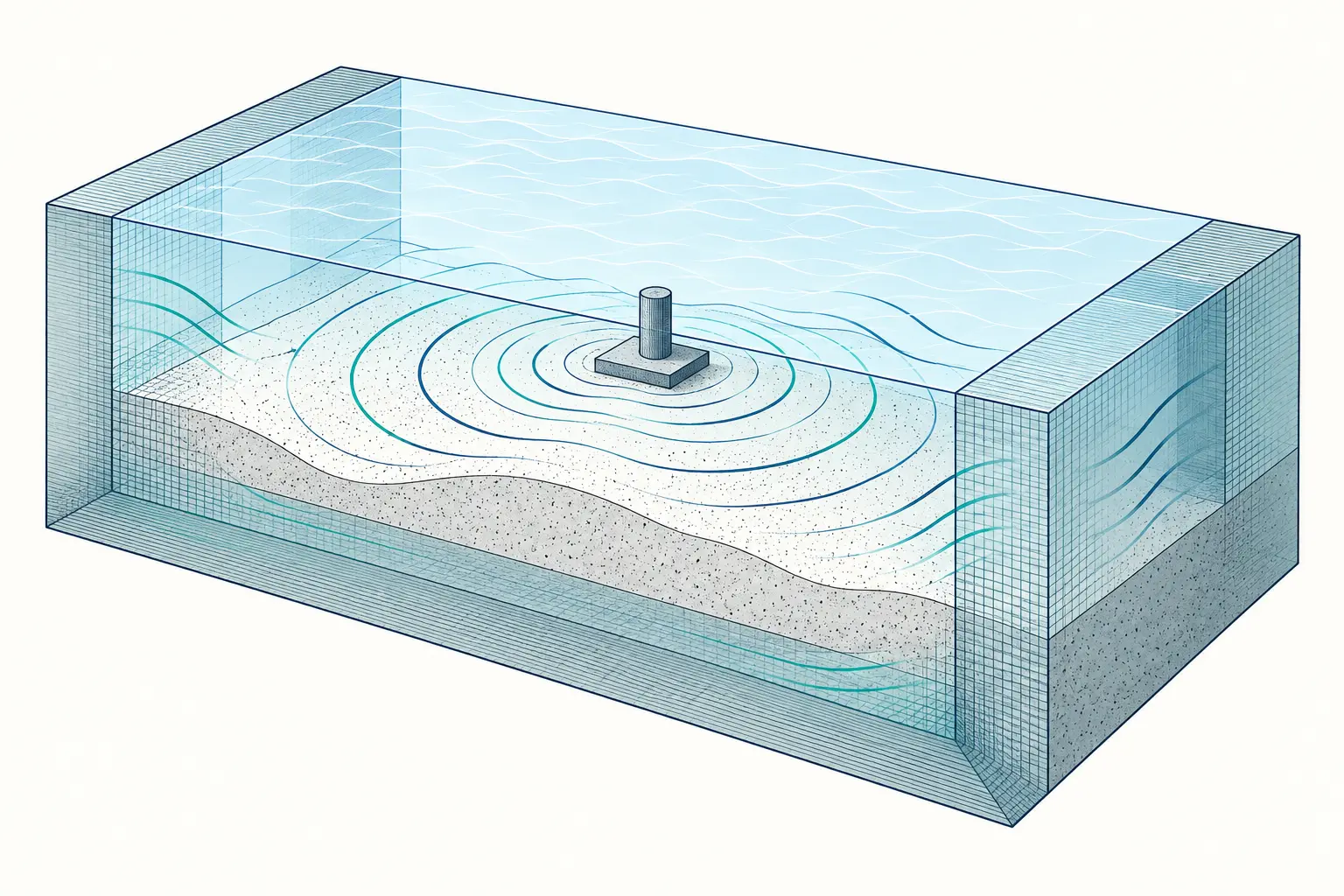
A numerical model must end somewhere, but physical waves continue travelling. Reflections from the model boundary can be mistaken for real resonances or attenuation.
He first reproduced reference foundation responses in a finite COMSOL domain, testing mesh quality, boundary conditions, domain size and the PML. He is now coupling water, soil and structural barriers and comparing energy-flow measures across the acoustic and elastic domains.
A verified open-domain model is the foundation for deciding whether a submerged wall actually protects marine life or merely appears effective because of a numerical artefact.
Research evidence
Explore published studies, conference contributions and ongoing investigations.
Work in progress
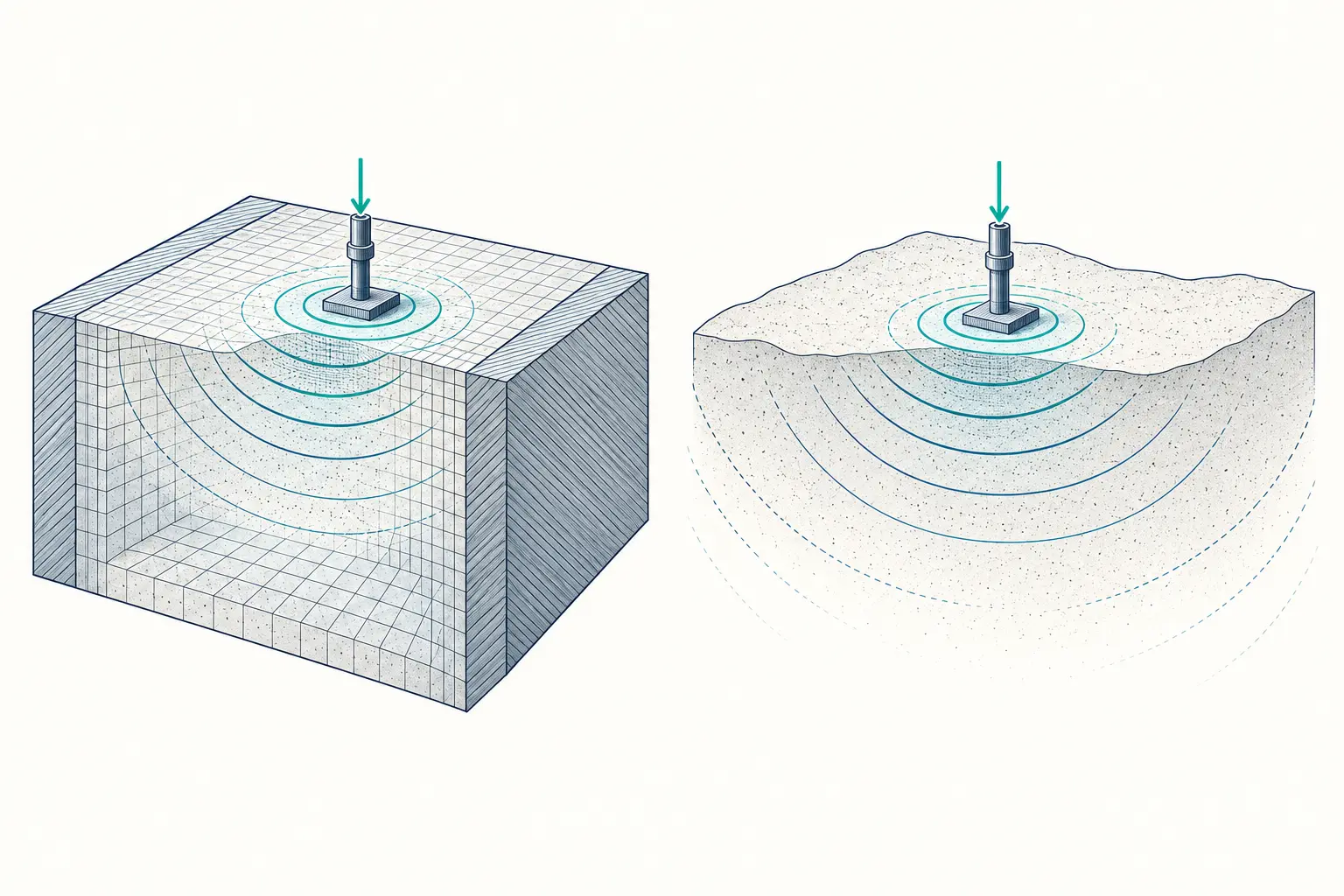
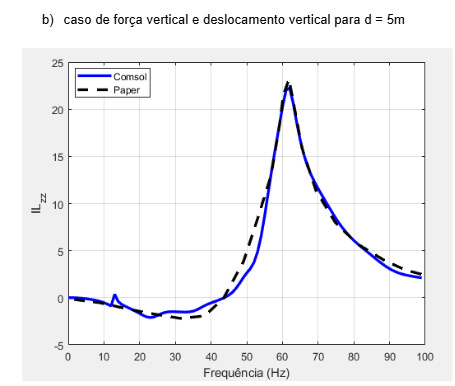
After correcting the boundary treatment and calibrating the domain, the simulated vertical response follows the reference curve closely through the main resonance and its decay.
Work in progress
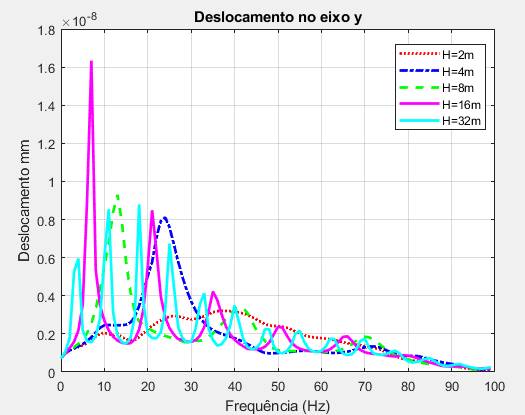
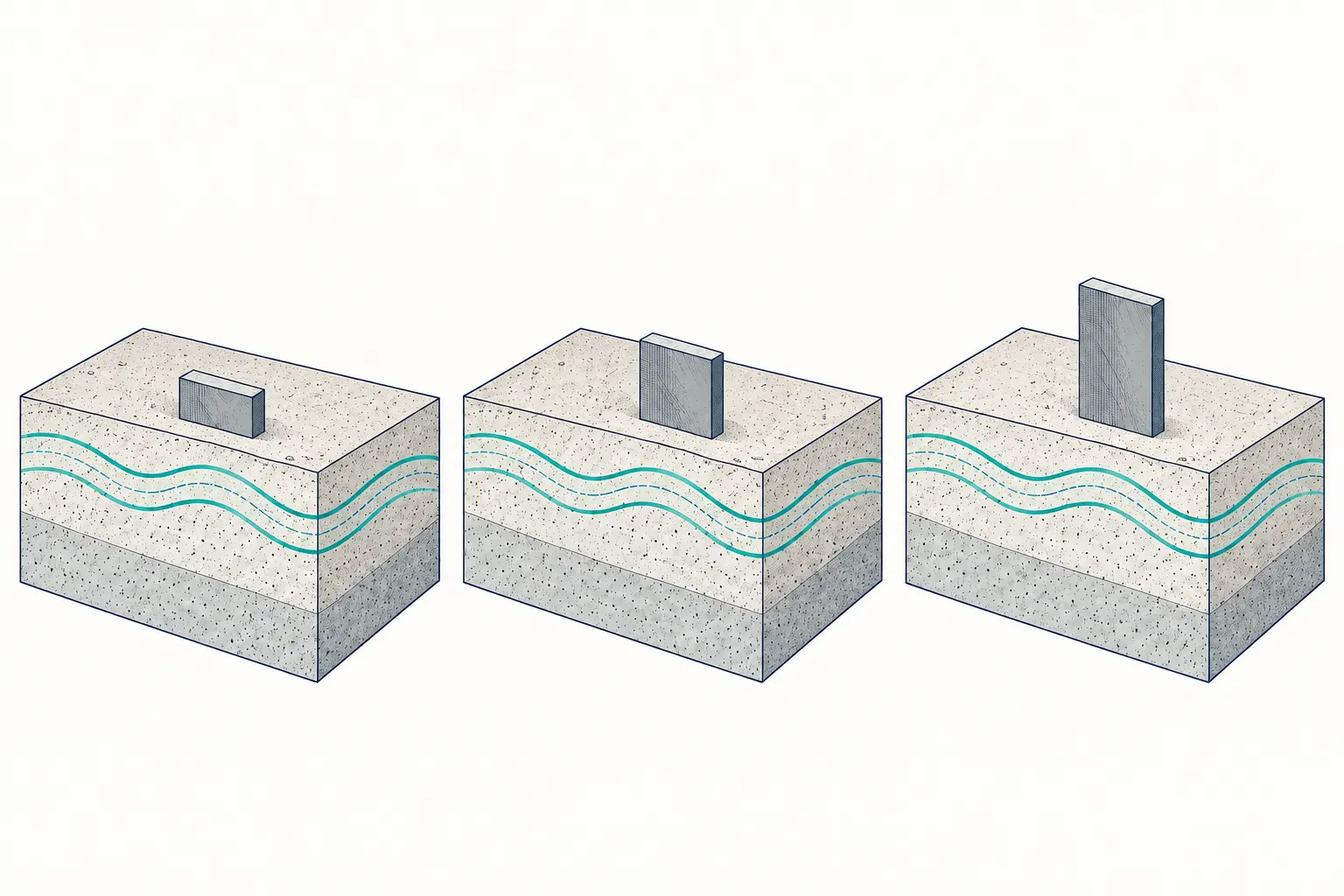
Changing wall height does not simply raise or lower one response curve. Taller configurations introduce strong low-frequency peaks and redistribute the response across several modes.